
Airworthiness reviews
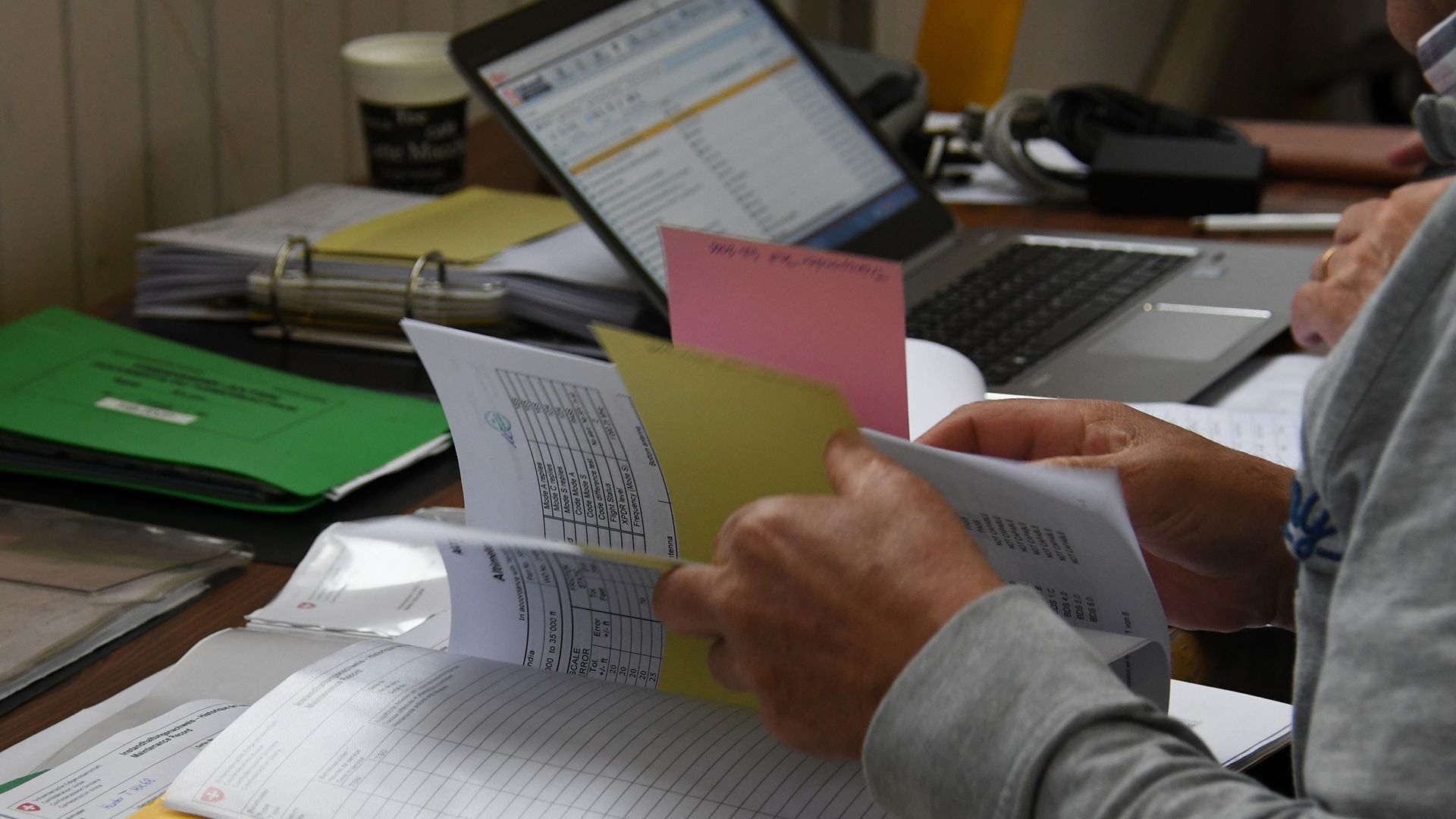
Aircraft registered in the Swiss Aircraft Registry must either undergo an annual airworthiness review (EASA aircraft) or a review every one to three years (Non-EASA aircraft).
_1920x1080.jpg?w=1024&auto=format)
- Aircraft that fall within the scope of the EASA Basic Regulation (EC) N° 2018/1139 (EASA aircraft) must generally inspected every 12 months in order to confirm their airworthiness. The airworthiness is attested with the issuance of an airworthiness review certificate (ARC EASA Form 15) which is valid for one year. The airworthiness can be inspected either by authorized personnel or by an authorized organization (CAMO/CAO) or by the FOCA.
- In the case of aircraft that fall outside the scope of the EASA Basic Regulation, i.e. which are listed in Annex I to the Regulation (Non-EASA aircraft), the Ordinance on the Airworthiness of Aircraft (VLL; SR 748.215.1) applies. These aircraft are inspected exclusively by FOCA. The confirmation of review was valid for two years until the end of 2025. From 2026, the confirmation of review will be valid for one to three years (determined based on the risk posed by the aircraft concerned and experience).
Changes to inspection interval for non-EASA aircraft from 2026:
The revised DETEC Ordinance on the Airworthiness of Aircraft (AAwO; SR 748.215.1) entered into force on 1 April 2025, introducing simplified conditions for non-EASA aircraft, particularly regarding aircraft maintenance. These were harmonised with the simplifications introduced for corresponding EASA aircraft in EASA Part-ML. It was therefore necessary to adjust the inspection interval for non-EASA aircraft, in line with the principle of equal treatment. The inspection certificate for non-EASA aircraft is currently valid for 24 months, while the airworthiness review certificate (ARC) for EASA aircraft is only valid for 12 months.
The inspection regulations (SR 748.215.2), which specify the inspection interval for non-EASA aircraft, were therefore amended with effect from 1 July 2025. Rather than implementing a uniform reduction in the inspection interval, the appropriate interval will be determined using new principles introduced by EASA. From 1 January 2026, the inspection interval for each aircraft will be set at 12–36 months in accordance with risk- and performance-based principles. The inspection interval is determined by the risk associated with the aircraft, as well as by performance-related data on incidents and empirical values. Aircraft operators can have a particular influence on the latter, which includes criteria such as deviations from manufacturer recommendations (e.g. time between overhaul (TBO)), the number of deficiencies during the inspection and the corresponding rectification culture. This means that the aircraft operator can influence the inspection interval to a certain extent, provided that the risk potential of the aircraft in question allows for it, thereby also saving costs and allowing the FOCA to carry out its supervision activities in a more focused manner.
Examples:
- A glider can be assumed to pose a low risk due to its rather small mass, few passengers and absence of fuel. In this respect, the inspection interval would tend to be set at 36 rather than 12 months. However, if the aircraft is maintained to a low standard and many deficiencies are identified during the inspection, a 24-month inspection interval could still be applied (as before).
- A relatively heavy, historic aircraft (possibly even with a turbine engine) would generally be due for inspection every 12 months. However, if the aircraft is largely maintained in accordance with all of the manufacturer's recommendations and no deficiencies are identified during the inspection, a 24-month inspection interval may still apply.
If the airworthiness review for an aircraft is due, ideally a review should be carried out in the 90-day period before the expiry date of the airworthiness review certificate or the confirmation of review. Aircraft without a valid airworthiness review certificate or a valid confirmation of review may no longer be operated. Infringements of this rule may lead to criminal prosecution.