CO2 and non-CO2 emissions produced by aviation
Brief overview
- Aviation has an impact on the climate and contributes to global warming.
- CO2 emissions can impact the environment for several hundred years.
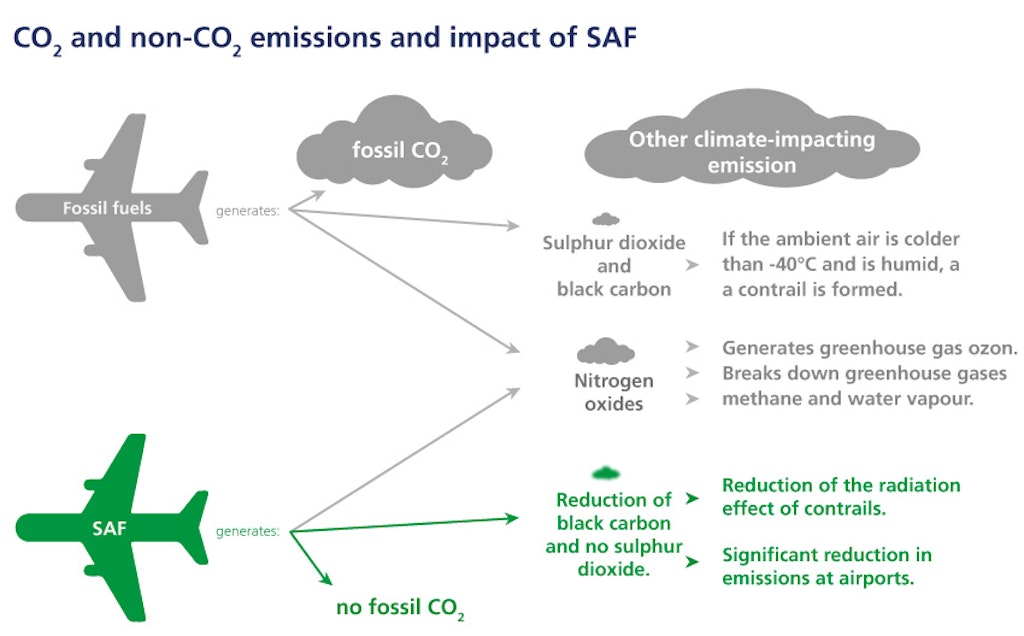
- Moreover, non-CO2 emissions such as water vapour, nitrogen oxides, sulphur dioxide and black carbon are produced. These emissions cause additional warming and cooling at high altitudes.
- The Federal Council's long-term climate strategy addresses both CO2 and non-CO2 emissions. Accordingly, measures are being implemented to minimise non-CO2 emissions that cause warming.
- The International Civil Aviation Organization (ICAO) has set itself the long-term goal of achieving net zero carbon emissions by
- Aviation can achieve the net zero carbon target using sustainable aviation fuels, optimised aircraft technology and air traffic planning, negative emissions technologies (FOEN) and market-based measures.
A closer look
Aircraft emit CO2 and other exhaust gases during the fuel combustion process. CO2 contributes to global warming. In line with its fuel consumption, aviation accounts for 2–3% of global greenhouse gas emissions. Non-CO2 emissions both warm and cool the atmosphere, and contribute to additional global warming overall.