

Robinson R44 II / Fractured Push-Pull Tube for tail rotor control
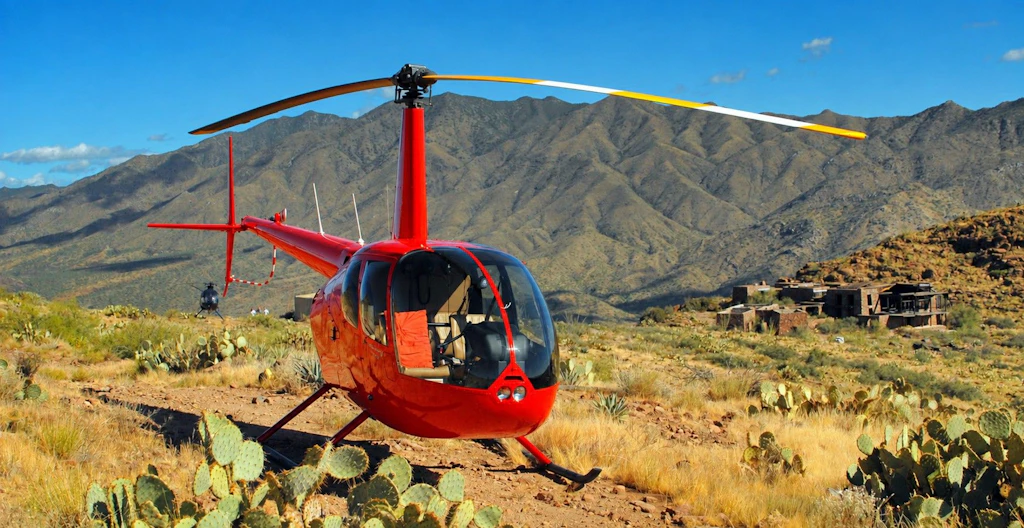
FOCA SAND 2026-001
The issue
After a scenic flight with three passengers on board the R44 II helicopter, the pilot returned to Sitterdorf (LSZV) via Sector S. After a brief hover at approximately 2 m above the ground, the pilot intended to continue hovering towards the parking stand (air taxi), when the helicopter began to rotate around its vertical axis to the right and subsequently struck the ground (source: STSB Prevention Bulletin 2026, 1st quarter).
STSB investigation
The Lycoming IO-540-AE1A5 engine and its fuel supply showed no abnormalities. The last engine maintenance was performed on 07.03.2024 at 2852:52 TSN, and the last 50-hour inspection at 932:43 TSO. A visual inspection of the tail rotor, its positive-drive and uninterrupted transmission and the tail rotor control system revealed no abnormalities. In particular no signs of abnormal blade excursions or deformation were observed at the tail rotor hub.
Cause STSB
The left pedal on the pilot’s side was no longer connected to the tail rotor control and could move freely; the unbent control tube (Push-Pull Tube Assembly C343-9) had fractured, and as a result no force was transmitted from the left pedal to the tail rotor control. The fracture was located in the area of the inspection hole in the rod-end thread. The previous maintenance records contained no indications of pre-existing problems in the tail rotor control system.
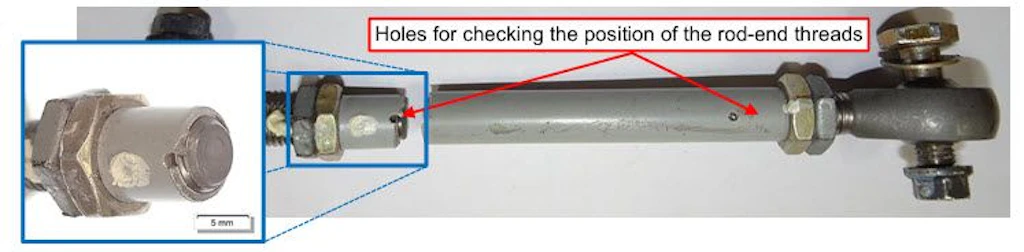
The fracture was located in the area of the bolt end and at the level of the transverse bore. It occurred at an angle of 45° and exhibited a dimple rupture (instantaneous fracture). In some areas, the dimples were conspicuously coarse. Intermetallic phases were visible within the dimples. Fatigue fracture could not be detected. The material is a cold-worked aluminum alloy typical for use in the aerospace industry. The microstructural analyses reveal an unusual, heterogeneous condition. Insufficient mechanical working or exceeding the prescribed temperature during heat treatment typically leads to such results.
Measures
The FOCA is using this SAND to inform the aircraft operators affected in Switzerland about a possible safety risk during the operation of the affected aircraft.
In accordance with (EU) 376/2014, Article 9(3), the FOCA has forwarded all relevant safety-related information from incident reports to the competent authority, the FAA, of the Member State concerned in the USA.
All relevant safety-related information from the incident report was forwarded to the competent organisation, Robinson, which is responsible for the design of the aircraft, engine, rotor or parts and equipment in question.
Have you observed the same or similar findings on a helicopter that you operate or maintain? We would greatly appreciate any information or confirmation you can provide.
Reporting via www.aviationreporting.eu
If you have any questions or concerns, our experts will be happy to help.
Contact:
Christian Hanke
Federal Office of Civil Aviation (FOCA)
Safety Division Aircraft