
Consumer information
Drones of all kinds can be bought in shops and on the internet. There are a few things you should bear in mind before buying a drone.
Drone classes and class identification labels
Drones intended for use in the open category (including ‘toy’ drones) or in the specific category according to a Standard Scenario (STS) are divided into different classes:
- Classes C0, C1, C2, C3 and C4 for the open category;
- Classes C5 and C6 for Standard Scenarios.
The class determines the subcategory or Standard Scenario in which the drone can be used. This means that before you buy a drone, you should check that its class is suitable for its intended use. For example, if you can't completely rule out flying over people not involved in the operation of the drone, a C0 or C1 class drone is required. Go to the Flight rules page to find out the subcategory in which each class can fly.
CE marking
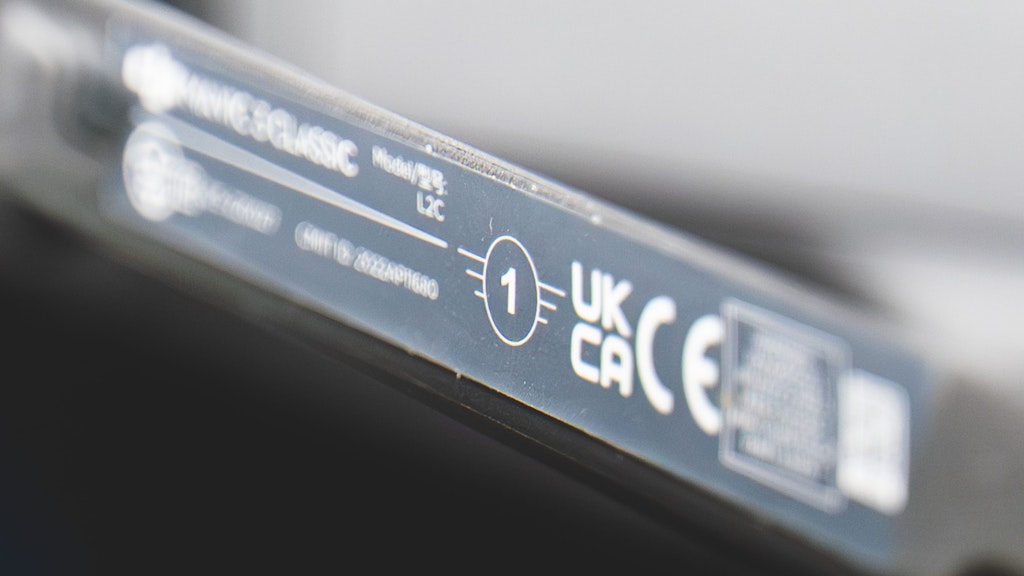
All drones, like many other products, must carry a CE marking and be accompanied by an EU Declaration of Conformity, in which the manufacturer states that the drone complies with all applicable legal requirements in terms of safety, health protection and environmental protection. These include the essential requirements relating to both drones and other elements involved such as radio communication equipment (because all drones are radio communication equipment) and in some cases other regulations. Simply put, it is not permitted to fly a drone which does not bear a CE marking.
The CE marking must be present on the drone and must not be confused with the class identification label, which has a different purpose.
Drones without a class identification label
Drones that do not bear a class identification label can still be flown in the open category provided they were placed on the market before 1 January 2024 (so-called legacy drones), subject to stricter conditions than those that apply to drones with a class identification label.
On the other hand, drones placed on the market from 1 January 2024 without a class identification label may only be flown in the specific category with PDRA or SORA authorisation.
Some legacy drone manufacturers offer consumers the option of making a drone compliant with class requirements retrospectively, usually by means of a software update. In such cases, the manufacturer will supply the drone owner with the appropriate class label to affix to the drone. The manufacturer should be contacted directly about this possibility.
Modifying a drone
In principle, a drone may not be modified to an extent that affects its compliance with the applicable technical requirements (e.g. by removing the flight height limit). If this is the case, the class identification label must be removed and the drone may only be used in the specific category (PDRA or SORA). If you modify a drone without the manufacturer’s authorisation, this may also affect the manufacturer's warranty.
What should I look out for when buying a drone?
The following points should be taken into account when purchasing a drone placed on the market on or after 31 December 2023:
- Does the drone have a CE marking?
- Is there a class identification label on the drone?
- Does the drone come with a user manual?
- Does the drone come with an information leaflet published by the European Aviation Safety Agency (EASA) setting out the safety rules applicable to the drone class?
- Is there an EU declaration of conformity (DoC)? The DoC must state that the drone complies with Delegated Regulation (EU) 2019/945.
- Is there a serial number on the drone?
If one or more of the above conditions are not met, it is likely that the drone does not comply with the applicable requirements. This could pose a danger. We therefore recommend that you do not purchase the drone and instead report it to the FOCA.
If you purchase a drone abroad, we recommend that you also refer to the information published by OFCOM on purchasing radio equipment abroad for personal use.
Class C5 accessory kit for Class C3 drones
A C3-class drone may be fitted with an accessory kit that converts it to Class C5, so that it can be used in STS-01. Each accessory in the kit must comply with the relevant essential requirements and bear a Class C5 label.
Drones intended for use in the specific category (PDRA or SORA)
A drone operated in the specific category with a PDRA or SORA does not necessarily have to have a class identification label. Under Delegated Regulation (EU) 2019/945, such drones do not have to meet any specific technical requirements to be placed on the market. However, the drone must have the technical capabilities specified in the authorisation issued by the FOCA and be equipped with a remote identification system as described in Delegated Regulation (EU) 2019/945. Other sector-specific legislation remains applicable, in particular that relating to telecommunications installations.