Not sure if the specific category is the right one for you? This page provides a brief overview of when drones can be flown in the specific category, as well as information on the related authorisation procedures.
What is the specific category?
In some cases, a drone cannot be flown according to open category flight rules.
This is the case if the drone:
weighs 25kg or more
is flown above 120m
is flown beyond visual line of sight (BVLOS)
is flown over an assembly of people
is flown carrying dangerous goods
In this case, the drone must be flown in the specific category. The drone operator must obtain operational authorisation from the FOCA or submit a declaration based on one of the procedures described below. To fly a drone in the specific category, the operator must demonstrate to the FOCA that their operation is safe, controlled and compliant with regulatory requirements. They must also submit an Operations Manual and an emergency response plan. Authorisation can be issued either location independent or location dependent.
Do I need to fly under the specific category?
The FOCA recommends that flights are conducted under the open category flight rules whenever possible, provided this does not compromise the purpose of the flight. The benefits of flying in the specific category often do not justify the additional cost and effort of the authorisation procedure. In such cases, the operator could instead adapt their operational plan to comply with the open category flight rules.
An operator plans to use a drone to film a wedding, but flying over an assembly of people is not permitted in the open category. The operator could instead fly alongside the assembly with a class C0 or C1 drone, in accordance with the rules of subcategory A1.
An operator wishes to conduct FPV flights – i.e. pilot the drone via a video system (usually video goggles or a monitor) connected to the drone’s camera. Flying a drone beyond visual line of sight (BVLOS) is not permitted in the open category unless the operator, who in this case is also the remote pilot, is assisted by an observer who keeps the drone in visual line of sight (VLOS) at all times. Having an observer allows the operator to avoid the lengthy and complex authorisation process required for BVLOS flight.
The specific category is used almost exclusively for professional drone operations, mainly due to cost factors and the technical knowledge required on the part of the operator. The FOCA recommends that individuals flying drones for private use adapt their operational plan to comply with the conditions of the open category instead.
Authorisation procedures
The specific category includes several types of authorisation procedure. Each one has a dedicated web page providing more detailed information.
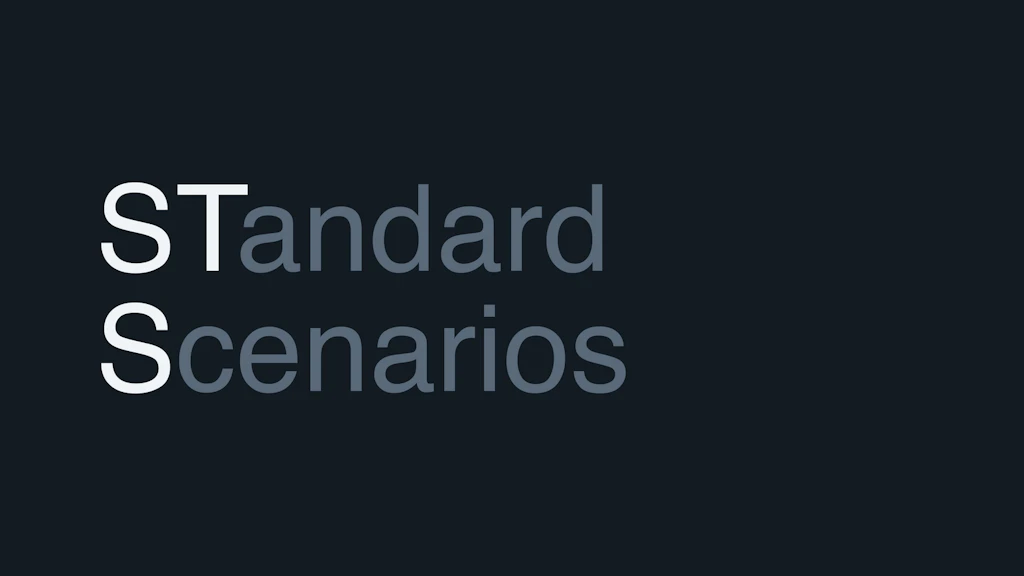
The standard scenarios (STS) offer the simplest way to conduct moderate-risk flights in the specific category. However, they do place some restrictions on how the drone is operated. Before flying a drone, the operator must submit an operational declaration to the FOCA, stating that the STS's technical and operational requirements have been complied with.
There are currently two standard scenarios, each with different use cases. Only Class C5 and C6 drones can be flown under a standard scenario.
If an STS is not possible because the drone does not belong to Class C5 or C6, operation using a pre-defined risk assessment (PDRA) may be an alternative in certain cases.
Standard scenarios (STS)
Standard scenarios are intended for operators who wish to conduct drone operations with a moderate and well-defined level of risk, for which the operational conditions are already established. By meeting strict technical and operational requirements, operators can fly their drones more easily. Currently, two standard scenarios are available.
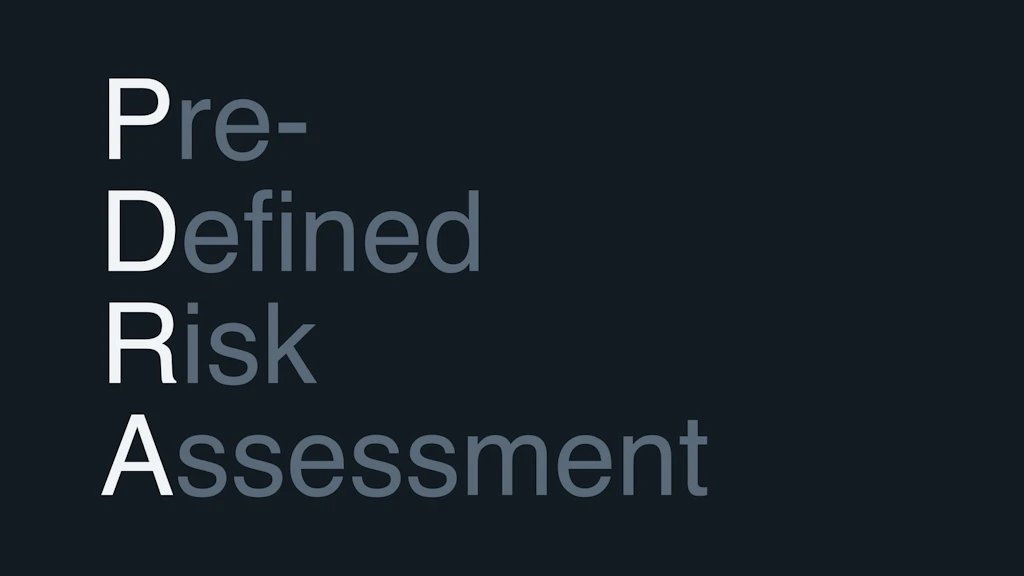
Pre-Defined Risk Assessments (PDRAs) provide a framework for routine flights with moderate risk. However, unlike in STSs, there are no specific requirements on which class of drones can be used. PDRAs also offer the operator greater flexibility, and cover various application cases.
The operator must demonstrate that the flight complies with the technical and operational requirements of the given PDRA. The FOCA issues an authorisation to the operator once all requirements have been met.
A PDRA is particularly suitable for drone flights to spray liquids or organisms, subject to specific additional requirements. For more information, please refer to the web page on spraying with drones.
Pre-defined Risk Assessment (PDRA)
In the case of a Pre-Defined Risk Assessment (PDRA), the operator must confirm that all predefined conditions are met, as indicated in the corresponding PDRA compliance matrix. Unlike STS, the drone is not required to bear a class identification label. Since PDRAs do not impose specific scenarios, applicants have greater flexibility in performing the drone operation they intend to conduct.
Spraying with drones (SPRAY)
The spraying of liquids with an unmanned aircraft is subject to prior authorization by FOCA. The specific requirements for submitting an authorization request depend primarily on the type of substance being sprayed and the intended use-case.
Operators should consider SORA authorisation when a flight:
cannot be carried out in accordance with open category flight rules
is not covered by existing STSs or PDRAs
does not involve the kind of risk that would require it to be conducted in the certified category
In these cases, the operator must carry out their own risk assessment using the ten-step SORA method. This can be used to determine preliminary ground and air risks and identify necessary mitigation measures. The final ground and air risks determine the required safety level and safety objectives for the operation.
This type of authorisation offers greater flexibility than STSs and PDRAs, but it is also more complex. The operator must therefore have adequate aviation knowledge.
The SORA authorisation procedure is longer and more expensive than those for an STS or a PDRA.
Specific Operations Risk Assessment (SORA)
When conducting an operation not covered by a STS or a PDRA, applicants are required to conduct a risk assessment, identify mitigations and comply with safety objectives. The risk assessment methodology, known as SORA (Specific Operations Risk Assessment), is developed for this purpose. EASA published the SORA as an Acceptable Mean of Compliance (AMC) to Article 11 to Regulation (EU) 2019/947.
The Light UAS Operator Certificate (LUC) issued by the FOCA confers special privileges on the operator. Operators must already hold at least one SORA authorisation to be eligible for an LUC. An LUC is valid indefinitely and allows the operator to authorise their own flights within a defined framework, without having to apply for authorisation from the FOCA.
Requirements relating to the company's organisation, safety management and staff training are therefore particularly high, which generally means that an LUC is suitable only for large companies with highly qualified staff.
Light UAS Operator Certificate (LUC)
A LUC (Light UAS Operator Certificate) is a certificate that grants professional drone operators and manufacturers special privileges for their drone operations. Holders of a LUC can independently perform well-defined processes for which the FOCA is normally responsible.
How to submit an initial application
Before applying for authorisation or submitting an STS declaration, the operator must ensure that the operation cannot take place in the open category.
The complexity, cost and duration of the procedure must be taken into account. The FOCA provides guidance material and decision aids to help operators select the appropriate procedure.
The decision tree set out in the document below provides an overview of the various conditions for each authorisation procedure:
Different documents are required depending on the procedure chosen. An Operations Manual is required in all cases. The FOCA will only process applications submitted with complete documentation.
The application must contain a complete signed application form and any other additional documents and forms required. Applications should be sent to rpas@bazl.admin.ch.